Building for the Intelligent Web: DE{CODE} 2026 Recap
For years, websites were primarily built around people as the only and primary visitors. The goal was pretty straightforward: rank in search, attract clicks, bring visitors to a page, earn trust and hopefully convert them into customers. Most digital strategies, SEO efforts and website structures evolved around that model for more than two decades.
At DE{CODE} 2026, an online event organized by WP Engine, one thing pointed out is impossible to ignore:
We’re living in the era of dual audiences (people and AI) and it has become the new standard.
And, as Brian Solis stated in hit session:
“We need to show up in ways that help people and AI agents find us.”
This shift is clear in terms of showing that AI is a part of how discovery itself works. Search behavior and buyer journeys changed and the role websites play inside those journeys changed alongside them.
What we’ve learned throughout this one-day event, if we needed to sum it up shortly:
Websites are no longer only destinations people visit as they are sources AI agents interpret, summarize, cite and use to generate answers. If you are not providing the right information the way people and AI Agents need, if you are missing important information or not bridging the gap – AI will make up stories around it and you might not like what you end up being portrayed as. So, adapt – fast! or you’ll be left behind and won’t succeed in the intelligent web era we’re all in.
And, not to make this piece just informational, here are all the main actionable takeaways to use, implement and start building for the intelligent web.
Structure your website so AI can actually understand it
One of the most repeated themes throughout DE{CODE} 2026 was machine readability. AI agents still struggle with heavily JavaScript-dependent experiences, unclear hierarchy and inconsistent structures. Unlike traditional search engines that evolved over years to better interpret websites visually, many AI systems prioritize accessibility to clean, structured information. So, what’s the solution?
As speakers pointed out, we need to start treating semantic markup, schema, internal linking and content relationships as part of visibility strategy rather than purely technical SEO tasks. If AI agents can’t properly understand what the content is about, who created it and how different pieces of information connect together, the website gets significantly harder to see contextually, cite and trust.
Now, how does this relate to WordPress and its users?
As we’re coming from a very specific industry niche, it’s safe to say that this is also where website builders and content systems matter more than many realize. The easier it is to maintain structured layouts, clear hierarchy and consistent content relationships across pages, the easier it becomes to keep websites understandable not only for humans, but for AI search as well.
Stop creating click-content only
An uncomfortable fact that needed to be said and reinforced throughout the whole event:
traffic attribution is becoming more and more unreliable due to all the changes AI brought.
This was specifically being said during The Marketer’s Playbook for the Intelligent Web session with Rebecca Berin, Darcy Kurtz and James Baldacchino. Users are becoming more and more comfortable in using AI for search and getting informed without necessarily clicking through to websites – the role of the website content has changed. Instead of producing large amounts of content that aims to capture rankings, we all need to focus more on clarity, depth and contextual authority. We do this so we become a source AI agents can confidently reference while still creating enough meaningful value for humans to continue deeper into the journey once they arrive.
Website becomes a validation layer
Another fact: the buyer behavior changed. As AI continuously handles large parts of early-stage research and comparison, users that do end up on websites are already informed and with specific opinions. In translation, many visitors now come to confirm trust, compare expertise and make decisions faster – which makes websites less dependent on broad educational funnels and more dependent on credibility signals, clear positioning, case studies, reviews, expertise and user experience that’s not in the way.
What all that means for us, one might ask? We need to rethink whether key landing pages, product pages and service pages have high-intent conversion-oriented content while providing the most helpful, valuable and useful content. If that scares you – know you’re not alone – we’re all in this together and need to roll up our sleeves and get to work.
Reinforcing brand authority
The next fact: AI (only) amplifies what already exists. As Liza Adams later expanded on this, brands with weak positioning, inconsistent messaging or unclear expertise will see those weaknesses reflected in AI-generated answers and summaries. At the same time, brands with strong authority signals, recognizable expertise and consistent digital presence will be better positioned and cited within AI.
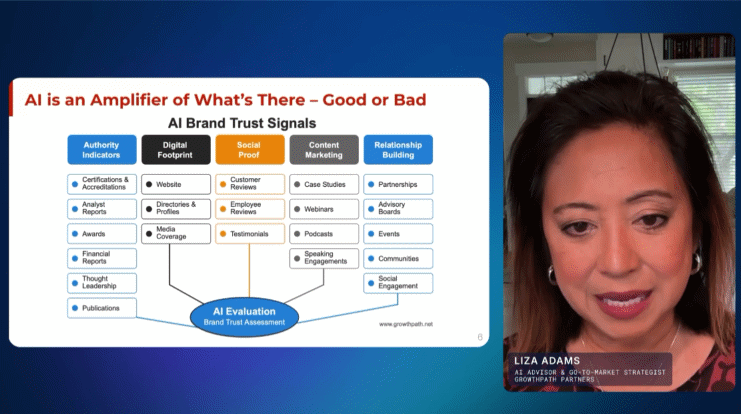
This is why trust signals like reviews, citations, partnerships, author credibility and sticking to your topic all contribute to how machines evaluate authority and thus visibility and outcomes.
Website structure as part of marketing strategy
Flexible foundation, structured content, as well as fast and scalable delivery are the new essential requirements for businesses that want to adapt faster and have their sites AI-ready. With that, website structure and architecture are no longer just a development concern as it shifts more and more to marketing. Why? Because the things that used to be purely technical decisions now directly determine whether you get found, cited and trusted – which is marketing’s problem to deal with and resolve.
Building for the intelligent web starts now
The biggest takeaway from DE{CODE} 2026 is that websites now need to work in multiple environments at the same time – and quickly. To be understandable to AI agents, useful to humans and structured well enough to remain visible as discovery continues evolving.
Challenging and exciting at the same time. As James Baldacchino said while chatting with the attendees:
“Embrace the “chaos”, keep learning, keep iterating and keep moving - fast.”
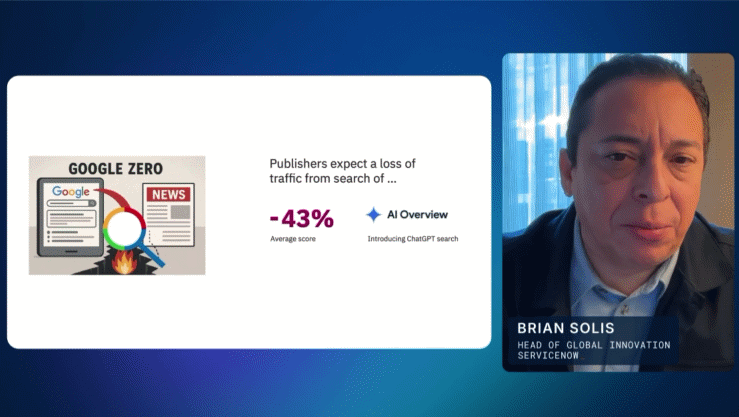
The shift is already happening through AI Overviews, conversational search, zero-click behavior and changing buyer journeys. The brands that adapt earlier will have more time to strengthen their authority, improve structure and build systems that remain discoverable across both traditional and AI-driven experiences.
All this doesn’t mean you need to rebuild everything overnight and from scratch or start chasing every new AI trend in an instant. In many cases, what will help is going back to fundamentals and doing them better:
clearer structure, stronger expertise signals, better content relationships, cleaner delivery, faster websites and more useful experiences.
The intelligent web will reward businesses that are easiest to understand, easiest to trust and easiest to recommend – both by people and by machines.
Share your thoughts on this and do tell if your site and business are AI-ready in our Community.
Frequently asked questions
What’s the difference between SEO and AIO and do I need both? SEO gets you found by search engines and AIO or AI optimization gets you cited and referenced by AI. Short answer: yes, you need both.
How do I know if my site is readable by AI agents? Start with the basics: is your content clearly structured, properly marked up and easy to navigate without JavaScript doing all the heavy lifting? If the answer is no, that’s your starting point.
Does my page builder or CMS affect how AI reads my site? Yes. Bloated or unclear markup makes it harder for AI to understand what your content is about.
Do I need to rebuild my entire website? No. Start with the basis: clearer structure, better content relationships, faster load times, cleaner delivery. In most cases, improving what’s already there gets you further than starting over.
If AI summarizes content without clicks, why does my website still matter? Because it’s your validation layer. People who do arrive – while already informed – they come to confirm trust and opinion. Your site and content in it either closes or loses them.
Where do I actually start? Pick the section of your site with the highest intent – product pages, service pages, key landing pages – and ask whether they answer trust-based questions fast and clearly.
What is the intelligent web? The intelligent web is where we are now: a web that is being used by two audiences – people and AI. Search engines, AI assistants and agents are all pulling from websites to generate answers, summaries and recommendations.
Can AI surf the web? Yes and it does. AI agents can browse, read, summarize and cite web content without a human initiating each step. This is exactly why it’s important to structure your website and information it contains in a way that is easy and clear for AI to use it.
